-
 The Legal Metrology (Government Approved Test Centre) Rules, 2011
The Legal Metrology (Government Approved Test Centre) Rules, 2011 (Draft)
The following 9 items will be verified and stamped by Government Approved Test Centres wef from 1 Jan 2012.
1. Measuring system for liquids other than water
2. Water meter
3. Electricity meter
4. Sphygmomanometer
5. Clinical thermometer
6. Glucometer
7. Compressed Natural Gas dispenser
8. Weigh bridges
9. Automatic rail weigh bridges
Government has invited application for GATC at a fee of Rs 10,000 per type of measuring instrument. The license issued for an initial period of 2 years. GATC has to follow the Act and rules framed by the government. It has to verify and stamp (using punches issued) the Weights & measures by collecting prescribed stamping fee and issue a certificate of verification. Immovable items are done insitu free of cost. Licesee has to get trained in NPL New Delhi/IILM Ranchi/Fluid Control Research Institute (FCRI), Palakkad.
FCRI, Palakkad has provided authorized and reliable third party certification with traceability to National / International Standards, assisted industries in testing and calibration of flow products, development of special products and getting ISO 9000 certification.
37. Penalty for contravention by Government approved Test Centre. - (1) Where any Governent approved Test Centre contravenes any of the provisions of this Act or the rules made there under, or the conditions of the licence, it shall be punished with fine which may extend to one lakh rupees.
(2) Where any owner or employee of a Government Approved Test Centre performing duties in accordance with the provisions of this Act or the rules made there under, willfully verifies or stamps any weight or measure in contravention of the provisions of this Act or the rules made thereunder, he shall, for every such contravention, be punishable with imprisonment for a term which may extend to one year or with fine which may extend to ten thousand rupees or with both.
-
Sphygmomanometer
A sphygmomanometer or blood pressure meter is a device used to measure blood pressure. Mercury manometers are considered to be the gold standard and are consistently accurate. It consists of an inflatable cuff, a measuring unit (the mercury manometer, or aneroid gauge), and inflation bulb and valve, for manual instruments. The cuff is normally placed smoothly and snugly around an upper arm, at roughly the same vertical height as the heart while the subject is seated with the arm supported.
By observing the mercury in the column while releasing the air pressure with a control valve, one can read the values of the blood pressure in mm Hg. The peak pressure in the arteries during the cardiac cycle is the systolic pressure (normally 120 mm Hg), and the lowest pressure (at the resting phase of the cardiac cycle) is the diastolic pressure (80 mm Hg, normal). A stethoscope is used in the auscultatory method. Systolic pressure (first phase) is identified with the first of the continuous Korotkoff sounds. Diastolic is identified at the moment the Korotkoff sounds disappear (fifth phase).
-
Peg - unit of measurement
Peg is an informal unit of measurement of alcoholic spirits (60 ml). Peg measures for use in preparing alcoholic drinks can hold anywhere from 1 to 2 fluid ounces (30-60 ml).
-
Fuel Dispensers
Fuel Dispensers
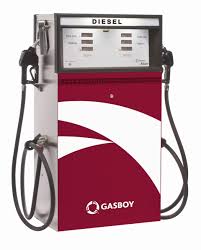
One of the most important functions for the pump is to accurately measure the amount of fuel pumped. A fuel dispenser is a machine at a filling station that is used to pump gasoline (Petrol), diesel, CNG, CGH2, HCNG, LPG, LH2, ethanol fuel, biofuels like biodiesel, kerosene, or other types of fuel into vehicles. Fuel dispensers are also known as bowsers (in Australia), petrol pumps (in Commonwealth countries), or gas pumps (in North America).
A modern fuel dispenser is logically divided into two main parts — an electronic "head" containing an embedded computer to control the action of the pump, drive the pump's displays, and communicate to an indoor sales system; and secondly, the mechanical section which in a ‘self contained’ unit has an electric motor, pumping unit, meters, pulsers and valves to physically pump and control the fuel flow.
Nozzles are attached to the pump via flexible hoses, allowing them to be placed into the vehicle's filling inlet. In some countries, pumps are able to mix two grades of fuel together before dispensing; this is referred to as blending or mixing.
Flow measurement is almost always done by a 4 stroke piston meter connected to an electronic encoder. In older gas pumps, the meter is physically coupled to reeled meters (moving wheels with numbers on the side), while newer pumps turn the meters movement into electrical pulses using a rotary encoder.
Gasoline is difficult to sell in a fair and consistent manner by volumetric units. It expands and contracts significantly as its temperature changes. Modern tanks are (submerged) non-metallic and sealed to stop leaks. Some have double walls or other structures that provide inadvertent thermal insulation while pursuing the main goal of keeping gasoline out of the soil around the tank. The net result is that while the air temperature can easily vary between -1.11°C and 29.4°C, the gasoline in the insulated tank changes temperature much more slowly.
5 litre conical measure

Conical measures are made of G.I sheets, Stainless Steel and Brass. The various capacity of the measure are 100 ml ,200 ml, 500 ml, 1 l, 2 l, 5 l, 10 l, 20 litre.
-
The National Physical Laboratory of India
The National Physical Laboratory (NPL) is the measurement Standards laboratory in India, which calibrates National Standards of weights and measures. It is involved in research and assist industries, national & other agencies for the development of high precision measuring devices. NPL is under CSIR and was formed on January 4, 1947 with Dr. K. S. Krishnan as the first Director.
The National Physical Laboratory is the premier research laboratory in India in the field of physical sciences. It has developed core competencies in standards, apex level calibration, engineering materials, electronic materials, materials characterization, radio and space physics, global change and environmental studies, low temperature physics, and instrumentation.
NPL Campus is 21 km from the Indira Gandhi International Airport and 6.5 km from the New Delhi Railway Station.
National Physical Laboratory
Dr. K.S. Krishnan Marg
New Delhi - 110012
Phone: 91-11-45609212, 91-11-25742610, 91-11-25742611, 91-11-25742612
Fax: 91-11-45609310, 91-11-25726938.
-
Virtual Metrology museum

Weights - State Museum, Bhubaneshwar, India

'Para' measure from Kerala used to measure grains (rice)

Measures from China
-
Virtual Metrology museum
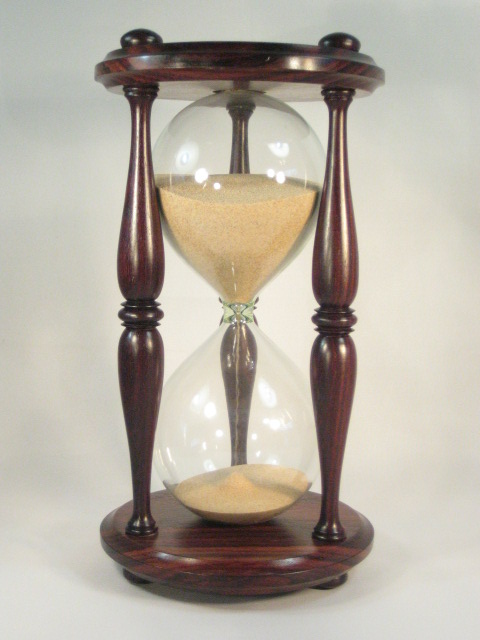
An hourglass, also known as a sandglass, sand timer or sand clock, is a device for the measurement of time.
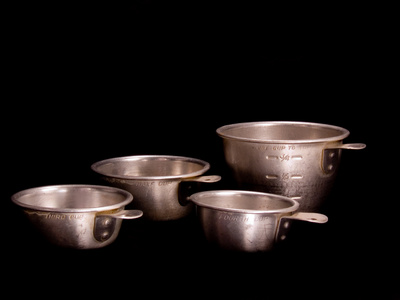
Vintage measuring cups
Vintage tape measure

-
Virtual Metrology museum
-
Virtual Metrology museum
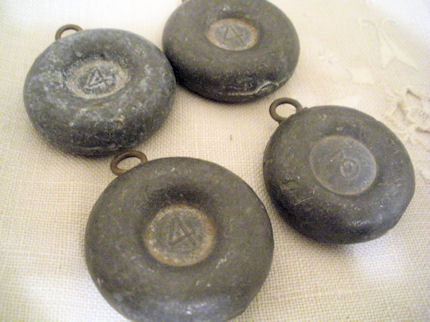
Vintage brass weights

Stone weights, Kerala

-
Virtual Metrology museum

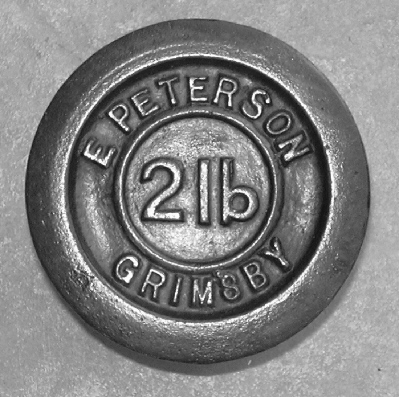
Ancient weights and measures from Britain
Tags for this Thread
 Posting Permissions
- You may not post new threads
- You may not post replies
- You may not post attachments
- You may not edit your posts
-
Forum Rules



 Reply With Quote


Bookmarks